For International Day of Women and Girls in Science, Clinical Trials Data Manager Amber Geer shares the impact of data science in maternal health, her research on the I’M WOMAN Trial and seeing firsthand how the trial operates in Nigeria.
What do you do, and how did you get into data science?
I’ve been at the London School of Hygiene & Tropical Medicine (LSHTM) for about ten years, working in the Clinical Trials Unit. I studied Medical Sciences at the University of Exeter, then completed a Master of Research at Imperial College London before joining LSHTM as a data assistant in 2015.
What I love about data work is that it’s part technical, part problem-solving. You’re constantly figuring things out and building systems that make research possible.
You worked on research that helped inform the I’M WOMAN Trial. Can you tell us about that?
The WOMAN-PharmacoTXA trial, a pharmacokinetic study run by the Clinical Trials Unit in collaboration with the Université de Versailles Saint-Quentin-en-Yvelines, looked at the fastest and most effective ways to give tranexamic acid (TXA) – a drug used to manage severe postpartum bleeding. It compared intravenous (IV), intramuscular (IM) and oral use of TXA to see how quickly each route reached therapeutic levels, the point at which the drug becomes effective. IV TXA worked almost immediately, IM TXA was slightly slower but still reached effective levels quickly, while oral TXA was too slow to be useful in emergencies like severe bleeding after birth.
This evidence was critical. It showed that IM TXA could be a realistic option in healthcare settings where IV access isn’t possible and helped support the decision to move forward with a much larger study. That work ultimately contributed to the I’M WOMAN Trial, which is recruiting over 30,000 women in hospitals across Pakistan, Tanzania and Nigeria.
Importantly, this was among the first studies in pregnant women to demonstrate a faster, simpler way to give TXA compared to IV injection, which can take around ten minutes to administer since it requires a certain level of skill to insert a cannula. Of course, time makes all the difference when a woman is bleeding severely after birth.
What was your role in that study?
It was the first pharmacology study I ever data managed. There were about 120 patients randomised across three sites, and we were using a new database system. I had to teach myself how to build a database in REDCap.
After we published the initial paper, we later shared this data with Dr Homa K. Ahmadzia who led a individual patient data (IPD) meta-analysis evaluating TXA pharmacokinetic data from four trials. This is similar to how we approached the WOMAN-2 IPD meta-analysis, which showed that TXA cut the risk of life-threatening bleeding by nearly one quarter.
What’s been one of the most meaningful moments in your career so far?
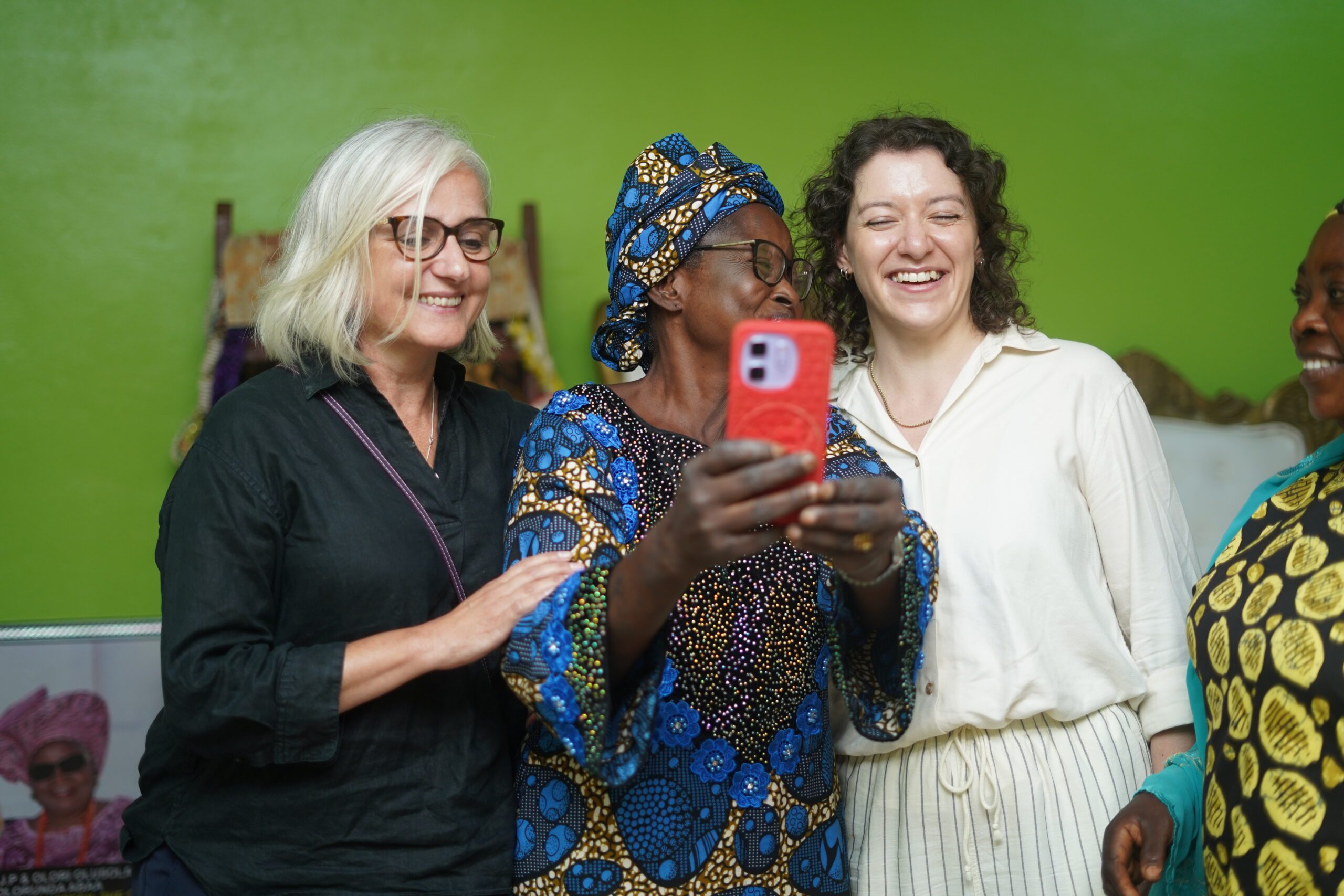
Visiting hospital sites in Nigeria.
When you work in data, you see numbers every day – but you don’t always see the people behind them. Seeing women experiencing postpartum haemorrhage and complications completely changed how I understand the data I work with.
It also helped me understand how health systems function on the ground, which makes me better at my job.
How does that experience change how you work with trial sites?
It gives you more context and more empathy. We can sit in London and give guidance, but until you see how hospitals are laid out, how staff move between wards, and how stretched resources can be, you don’t fully understand the challenges.
What works in one country won’t necessarily work in another, so building strong relationships with national coordinators and site teams in Nigeria, Tanzania and Pakistan is so important.
Why is data so important in clinical trials?
Data tells the story of what’s really happening. There are statistical ways to spot errors, but there’s also a human side – sometimes something just looks wrong. Picking that up, investigating it, and fixing it is incredibly satisfying. It’s like solving a puzzle.
As a data team, we’re proud of what we do. Even small improvements in data quality matter. Ideally, everything would be perfect – but in reality, you have to be pragmatic and work with what’s possible.
What are you working on now?
I’m currently helping to set up the WOMAN-3 Trial, building new databases and case report forms.
Developing a new trial is exciting. Closing one can be stressful, but starting something new and designing systems from scratch is really satisfying. You want the data collection to be useful, clear, and realistic for the people using it.
Why is it important we have more data on women’s health?
I feel incredibly fortunate to work on trials that are largely led by women and shaped by women’s expertise. There’s a strong sense of empathy, collaboration, and shared purpose across the teams in ensuring all women are receiving the best possible care.
When women are involved at every stage of maternal health research, the work becomes more relevant, more human, and ultimately more impactful in the trial’s ultimate goal to reduce global maternal deaths.
Better data on women’s health doesn’t just improve research, it saves lives.
The WOMAN-3 Trial will soon start recruitment to look at the effect of giving oral tranexamic acid during menstruation in adult women for the treatment of anaemia.
For aspiring data scientists seeking to learn the skills needed to design, conduct, and analyse clinical trials, LSHTM offers a course in Clinical Trials by Distance Learning, as well as a short course in the Essentials of Clinical Trials taught in London and in The Gambia. Learn more about the expertise of the WOMAN Trial teams.
Find out more about the benefits of administering intramuscular TXA to reduce severe bleeding after birth.
Subscribe to our bimonthly maternal health research newsletter.